Introduction
Epoxy floor painting has become one of the most popular flooring solutions for residential, commercial, and industrial properties. Many property owners choose epoxy floor painting because it creates a strong, durable, and attractive surface that can withstand heavy use and harsh environmental conditions. In cities like Dubai, epoxy floor coatings are commonly used in garages, warehouses, factories, showrooms, hospitals, kitchens, and commercial buildings.
The reason epoxy floor painting is widely used is because epoxy resin forms a protective coating that bonds strongly with concrete surfaces. When applied correctly, epoxy floor paint creates a seamless layer that protects the floor from moisture, chemicals, stains, and heavy foot traffic. This makes epoxy floor painting an excellent choice for both decorative and industrial flooring.
Understanding the correct epoxy floor painting procedure, surface preparation steps, and application techniques is very important to achieve the best results. Professional epoxy floor paint companies follow specific preparation methods, use high-quality bonding agents, and apply multiple coating layers to ensure durability and long-lasting performance.
Table of Contents
- What is Epoxy Floor Painting
- Benefits of Epoxy Floor Painting
- Industrial and Residential Applications
- Epoxy Floor Painting Procedure
- Surface Preparation and Floor Preparation Steps
- How to Apply Epoxy Floor Paint on Concrete Floor
- Equipment Needed for Epoxy Floor Painting
- Epoxy Floor Painting Cost in Dubai
- Epoxy Floor Paint Types and Resin Options
- Application Techniques and Coating Methods
- Epoxy Floor Paint Company in Dubai
- Maintenance Tips for Epoxy Floors
- Conclusion
- FAQS
What is Epoxy Floor Painting
Epoxy floor painting is a flooring coating system created by mixing epoxy resin with hardeners and bonding agents. When these materials are combined, they form a chemical reaction that creates a strong and durable plastic-like coating on concrete surfaces.
This coating bonds tightly to the concrete floor and creates a protective layer that offers excellent durability, chemical resistance, and stain resistance. Epoxy flooring is also known for its glossy finish and decorative appearance, making it suitable for both functional and aesthetic applications.
Epoxy floor painting is often used in environments where floors must resist heavy loads, oil spills, chemicals, and constant foot traffic. Because of its durability and hygienic surfaces, epoxy flooring is commonly installed in hospitals, laboratories, and food processing facilities.
Benefits of Epoxy Floor Painting
Epoxy floor painting offers several advantages compared to traditional floor coatings and concrete finishes. The most important benefit is its exceptional durability and ability to withstand demanding environments.
Epoxy coatings create a seamless surface that prevents dust accumulation and moisture penetration. This helps maintain a dust-free environment, which is particularly important for industrial facilities and warehouses.
Another benefit of epoxy floor painting is its chemical resistance. Epoxy coatings can resist oil, grease, cleaning chemicals, and industrial liquids, making them ideal for garages, workshops, and manufacturing plants.
Epoxy flooring also offers excellent heat resistance and impact resistance. The strong coating protects the concrete floor from damage caused by heavy equipment or vehicles.
In addition to durability, epoxy floors are available in many color options and texture options. Decorative flakes, grain patterns, and high gloss finishes can be added to improve the visual appearance of the floor.
Industrial and Residential Applications
Epoxy floor painting is widely used across different industries and residential properties due to its versatility and performance.
Industrial facilities use epoxy coatings for warehouses, factories, and manufacturing plants because these floors must withstand heavy machinery and constant movement. Epoxy coatings provide a durable surface that resists abrasion and damage.
Commercial buildings such as shopping centers, restaurants, and showrooms also use epoxy flooring to create attractive and easy-to-clean surfaces.
In residential properties, epoxy floor painting is commonly used in garages, basements, kitchens, and balconies. Homeowners prefer epoxy floors because they provide stain resistance and a modern glossy appearance.
Healthcare facilities often install epoxy flooring because it creates hygienic surfaces that are easy to sanitize and maintain.
Epoxy Floor Painting Procedure
The epoxy floor painting procedure involves several important steps that ensure the coating adheres properly and provides long-lasting performance.
The process begins with surface preparation. This stage includes cleaning the floor, removing old coatings, filling cracks, and repairing damaged areas. Proper floor preparation is essential because epoxy coatings must bond directly to the concrete surface.
After surface preparation, a primer or bonding agent is applied to promote adhesion. The base coat is then applied using roller application or brush application techniques. This base layer provides the foundation for the epoxy coating system.
Once the base coat cures, additional layers such as decorative flakes or grain patterns can be added. These elements enhance the visual appearance of the floor.
Finally, a top coat or polyurethane topcoat is applied to seal the floor and improve durability. The top coat provides extra chemical resistance, stain resistance, and gloss finish.
Surface Preparation and Floor Preparation Steps
Surface preparation is one of the most critical steps in the epoxy floor painting procedure. Without proper preparation, the coating may fail or peel from the concrete surface.
The preparation process begins by thoroughly cleaning the floor to remove dust, grease, and contaminants. Grinding or shot blasting may be used to create a rough surface that improves adhesion promotion.
Cracks and holes in the concrete must be repaired using filling compounds or grouting techniques. These repairs ensure that the epoxy coating creates a smooth and even finish.
Moisture testing is also performed to ensure the concrete surface does not contain excessive moisture. If necessary, a moisture barrier may be applied before installing the epoxy coating.
Proper surface preparation ensures that the epoxy resin bonds effectively to the concrete floor and provides maximum durability.
How to Apply Epoxy Floor Paint on Concrete Floor
Applying epoxy paint on a concrete floor requires careful mixing, application techniques, and curing conditions.
The epoxy resin and hardener must be mixed according to specific mixing ratios recommended by the manufacturer. Improper mixing can affect curing time and coating strength.
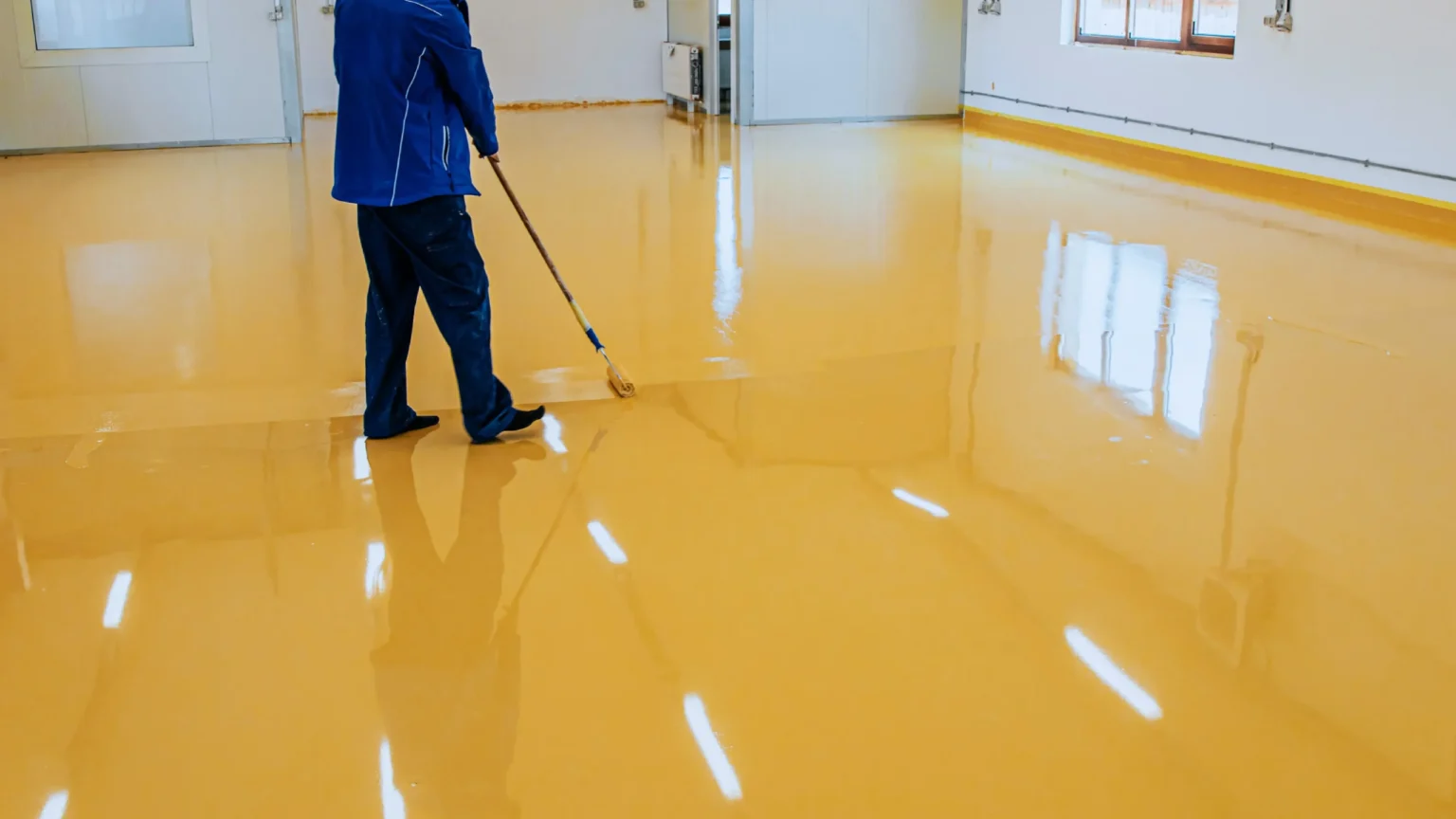
After mixing, the epoxy coating is applied using paint rollers, brushes, or trowel application methods. Roller application is the most common technique because it ensures even distribution across the floor surface.
During application, it is important to maintain proper coating thickness and remove bubbles that may appear in the epoxy layer. Bubbles removal can be performed using specialized rollers designed for epoxy coatings.
Once the epoxy coating is applied, the floor must remain undisturbed during the curing time. Temperature control and a dust-free environment are important to achieve a smooth and durable finish.
Equipment Needed for Epoxy Floor Painting
Proper equipment is essential for achieving a smooth and durable epoxy floor coating. Professional epoxy floor painting companies use specialized tools and protective equipment to ensure accurate application and long-lasting performance.
One of the most important tools used during epoxy floor painting is the floor grinder. This machine prepares the concrete surface by removing dirt, oil, and old coatings. Proper grinding improves adhesion promotion and helps the epoxy resin bond strongly to the concrete floor.
Another essential tool is the paint roller designed specifically for epoxy coatings. Roller application helps distribute the epoxy evenly across the floor surface and maintain the correct coating thickness. For detailed areas such as corners and edges, professionals often use brush application techniques.
Mixing equipment is also required when preparing epoxy resin. The epoxy components must be mixed according to the correct mixing ratios to achieve proper curing time and coating strength. Electric mixers help combine the resin and hardener evenly.
Safety equipment is also important during installation because epoxy materials may contain hazardous substances. Workers typically wear protective gear such as gloves, masks, and safety glasses to prevent skin contact and inhalation of fumes.
Below is a table showing common equipment used in epoxy floor painting.
| Equipment | Purpose |
|---|---|
| Floor Grinder | Surface preparation and cleaning |
| Paint Rollers | Even epoxy coating application |
| Mixing Drill | Mixing epoxy resin and hardener |
| Brushes | Edge finishing and detailed areas |
| Safety Gear | Protection from chemicals |
| Spiked Rollers | Bubbles removal during coating |
Using the correct tools and equipment ensures the epoxy floor painting procedure is performed efficiently and the final coating provides durability, chemical resistance, and a smooth glossy finish.
Epoxy Floor Painting Cost in Dubai
The cost of epoxy floor painting depends on several factors such as floor size, coating thickness, surface condition, and decorative finishes.
| Floor Area | Average Epoxy Floor Painting Price |
|---|---|
| Small Garage | AED 900 – AED 1500 |
| Apartment Floor | AED 1500 – AED 3000 |
| Commercial Space | AED 3000 – AED 7000 |
| Warehouse Floor | AED 7000 – AED 20000 |
These prices may vary depending on the complexity of the project, floor preparation requirements, and type of epoxy coating used.
Epoxy Floor Paint Types and Resin Options
Different types of epoxy resin systems are used depending on the project requirements and environmental conditions.
| Epoxy Type | Best Application | Key Benefits |
|---|---|---|
| Self Leveling Epoxy | Commercial Floors | Smooth finish |
| Mortar Epoxy | Industrial Floors | High durability |
| Quartz Epoxy | Decorative Flooring | Attractive appearance |
| Anti Static Epoxy | Laboratories | Electrical safety |
These coating systems provide various advantages including stain resistance, chemical resistance, and high durability.
Application Techniques and Coating Methods
Several application techniques are used when installing epoxy floor coatings. The most common methods include roller application, brush application, and trowel application.
Roller application is widely used because it spreads the epoxy coating evenly across large floor surfaces. Brush application is typically used for edge finishing and detailed areas.
Trowel application is often used for thicker coatings or industrial floors that require extra strength and durability.
Professional installers also use anti-slip additives to create textured surfaces that reduce the risk of slipping. Decorative flakes can also be added between coating layers to enhance the visual appearance.
Epoxy Floor Paint Company in Dubai
Choosing a professional epoxy floor paint company is important to ensure high-quality results. Experienced installers understand the correct epoxy floor painting procedure and use advanced equipment for floor preparation and coating application.
A reliable epoxy floor painting company will provide consultation, surface inspection, and proper installation methods. They will also recommend the best epoxy resin type based on the intended use of the floor.
Professional companies also ensure safety precautions are followed during installation and use protective gear when handling hazardous materials.
Maintenance Tips for Epoxy Floors
Epoxy floors require minimal maintenance, but proper care can extend their lifespan significantly.
Cleaning the floor regularly helps remove dirt and debris that may scratch the surface. Using mild cleaning solutions helps maintain the glossy finish of the epoxy coating.
Avoid using harsh chemicals or abrasive cleaning tools that may damage the protective top coat. Repair techniques should be applied immediately if small cracks or damage appear.
Regular inspection and maintenance ensure the epoxy floor continues to provide durability and stain resistance for many years.
Conclusion
Epoxy floor painting is a durable and versatile flooring solution that provides long-lasting protection and attractive finishes for residential, commercial, and industrial spaces. With proper surface preparation, correct application techniques, and high-quality epoxy resin systems, epoxy floors can withstand heavy traffic, chemicals, and environmental conditions.
Property owners in Dubai increasingly choose epoxy floor painting because it offers durability, easy maintenance, and modern design options. By understanding the epoxy floor painting procedure, application techniques, and installation process, you can achieve a professional flooring system that enhances both performance and aesthetics.
FAQS
What is epoxy floor painting used for?
Epoxy floor painting is used to create durable and protective coatings for concrete floors. It is commonly used in garages, warehouses, factories, commercial buildings, and residential spaces because it provides strong chemical resistance, stain resistance, and long-lasting durability.
How to apply epoxy paint on a concrete floor?
To apply epoxy paint on a concrete floor, the surface must first be cleaned and prepared properly. Cracks should be repaired and the floor must be free from dust and oil. After surface preparation, a primer coat is applied followed by the epoxy base coat and a protective top coat.
How long does epoxy floor painting take to cure?
Epoxy floor coatings usually require 24 to 48 hours to dry for light foot traffic. However, full curing may take 3 to 7 days depending on the epoxy resin type, temperature conditions, and coating thickness.
What is the epoxy floor painting cost in Dubai?
The epoxy floor painting cost in Dubai depends on several factors such as floor size, surface condition, coating thickness, and decorative options. On average, epoxy floor painting may cost between AED 20 to AED 60 per square meter depending on the project requirements.
How long does epoxy floor paint last?
A professionally installed epoxy floor coating can last 10 to 20 years with proper maintenance. The durability depends on the quality of the epoxy resin, installation procedure, and the level of traffic on the floor.